
When browsing Xiaohongshu and Pinterest, those minimalist yet sophisticated bathroom spaces are really easy to fall in love with at first sight: matte black wall-mounted faucets, clean-lined slab countertops, brass showerheads with a retro feel… Who wouldn’t want that?
But reality is always more honest than filters.
Many people who followed the trend and bought “celebrity-endorsed” items faced a series of disasters within six months, making them want to immediately terminate their leases:
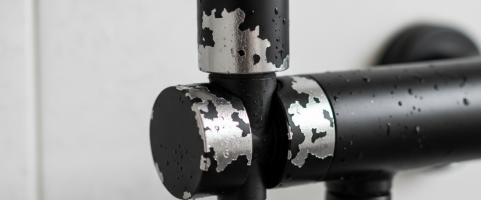
The black showerhead began to peel and lose paint , revealing a layer of grayish-white metal underneath.
Hand sanitizer stains seeped into the white slab countertop and were so stubborn that even alcohol couldn’t remove them.
green patina has grown on the surface of the brass faucets , and some have even broken joints and started to leak.
Why is this?
Because the bathroom is the most harsh environment in the home— high humidity, alternating hot and cold temperatures, and constant exposure to chemical cleaning agents .
In this environment, good looks alone won’t last long. Durability, corrosion resistance, and ease of cleaning are the true rules for survival.
Many people think it’s just bad luck that they ran into a bad product, but the real reason is that they chose the wrong process . For example, even though they are both black shower heads, the lifespan of a painted shower head and a PVD electroplated shower head is vastly different.
Therefore, before placing an order for any hardware, I really suggest that you first understand the most basic common metal surface treatment processes for home furnishings , so that you don’t end up with a faucet worth thousands of dollars that is only used once.
Next, let’s expose the traps of bathroom materials that “look high-end but are frustrating to use”.
Why does the paint on a black showerhead peel off? — Paint vs. PVD
The biggest and most common pitfall in bathroom renovation is black hardware.
There are currently two main types of black showerheads on the market:
① Baking paint (spray paint)
② PVD (vacuum plating).
They looked quite similar when I first brought them home, but their durability was on a completely different level.
1) Painting
Most black showerheads use this process, which is essentially just painting a layer of paint on the metal .
The drawback is extremely fatal:
Moisture can penetrate the paint layer → causing blistering
The paint chips easily with a light tap → Shower hoses, rings, facial cleansing devices can all scratch it.
Once the paint chips, large patches peel off, spreading like a “skin disease.”
If the bathroom has high humidity and poor ventilation, the paint will peel off even faster.
2) PVD Vacuum Deposition
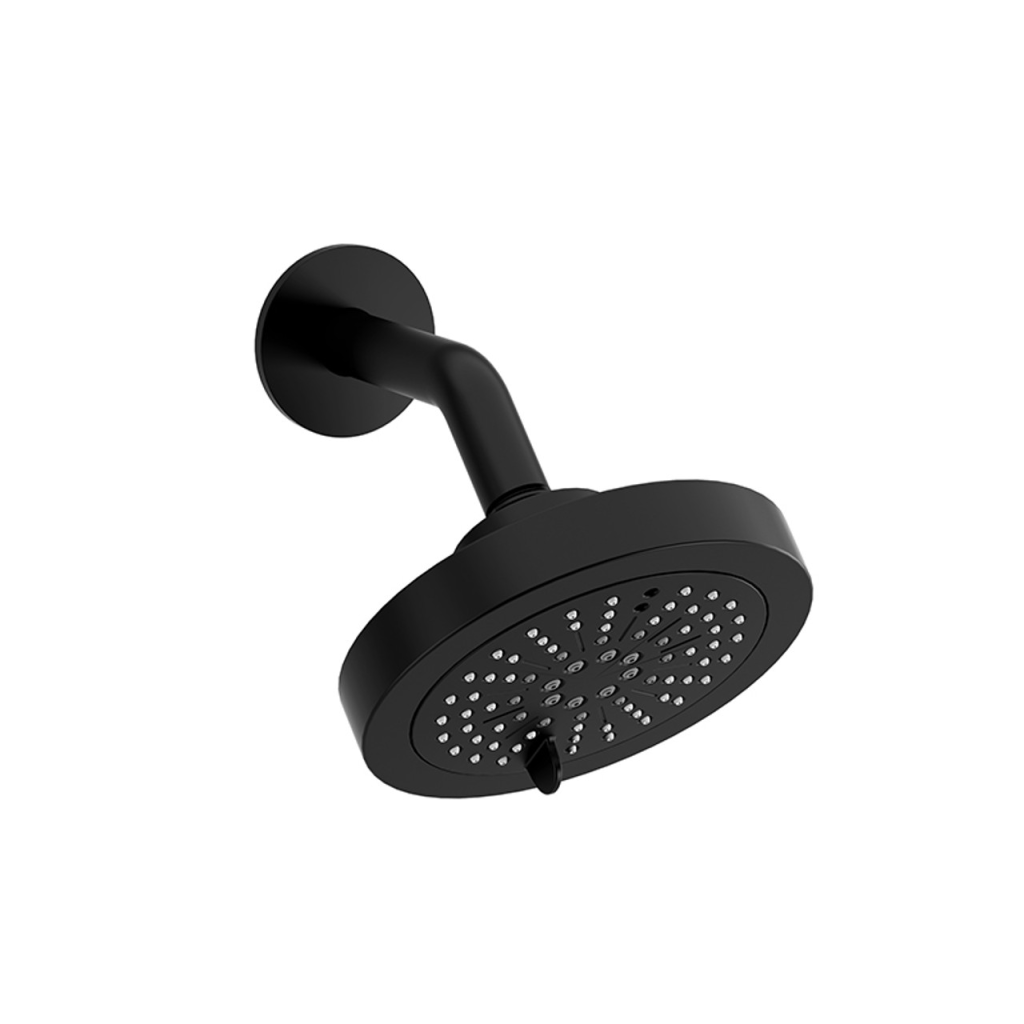
High-end brands mostly use this process, which uses physical vapor deposition to allow the coating to bond with the metal at the molecular level.
Its advantages are very prominent:
High hardness, scratch resistant
Oxidation resistant and does not turn white
Moisture and cleaning agents can’t handle it.
In short: With normal use, the color won’t fade even a little bit over several years.
✔ Tips for Avoiding Pitfalls
Ask before placing your order: “Is this painted or PVD?”
If the price is exceptionally cheap and the seller is vague, just skip it.
II. How to Choose Countertop Material? — Sintered Stone vs. Natural Stone vs. Ceramic
Bathroom countertops are often exposed to various toiletries, cosmetics, and acidic/alkaline cleaning agents, making them a “disaster zone.”
1) Sintered stone: High aesthetic appeal, but avoid “fake sintered stone”.
Sintered stone has been a top trend in the last two years, boasting a high aesthetic appeal, scratch and heat resistance, and it truly lives up to its reputation.
The problem is: there are too many fake sintered stone products (large slabs of brick masquerading as sintered stone) on the market .
risk:
If the water absorption rate is not well controlled,
hand soap, hair dye, and serum may easily seep into the skin. If they are not wiped clean, they may leave permanent “colored marks”.
The edges are fragile
and will chip easily if bumped.
There’s a reason why genuine sintered stone is expensive.
2) Natural marble: breathtakingly beautiful, but delicate.
Natural marble has beautiful textures, but it has many micropores.
risk:
Without regular crystal surface treatment , limescale and soap scum will quickly seep in.
Over time it will turn yellow and lose its luster.
If you’re a “lazy homeowner,” marble might not be the best fit for you.
3) Integrated ceramic basin: An underrated king of durability
Although it’s not exactly a “viral” internet sensation, it truly is:
No bleeding
No stains
Super easy to clean
Cheap and durable
For practical people, it’s almost the best choice.
III. Bathtub feel and durability: Acrylic vs. Cast iron
The first dilemma people usually face when thinking about installing a bathtub is: should they buy acrylic or cast iron?
Acrylic
advantage:
It doesn’t feel cold to the touch in winter.
Many styles
Lightweight and easy to install
Affordable price
shortcoming:
Surface hardness is average → Easily scratched
It may turn yellow over time.
Cast iron enamel
advantage:
Super durable
High gloss
It looks brand new even after more than ten years.
shortcoming:
Overweight (for older houses, the floor slab’s load-bearing capacity needs to be confirmed).
It feels cold to the touch in winter
Relatively few styles
IV. Why does the faucet “break”? — 59 Refined Copper vs. Zinc Alloy
Some faucets look heavy, but they actually have counterweights inside.
The outer shell is made of zinc alloy , and zinc can undergo intergranular corrosion in humid environments , making the metal brittle as if it were eaten away by insects.
In the worst-case scenario, the faucet breaks off from the inside, causing water to overflow.
✔ Key points to avoid pitfalls
Look for: 59% refined copper (copper content ≥ 59%)
Copper is inherently corrosion-resistant and has natural antibacterial properties, making it the best material for water fittings.
In conclusion: Bathroom products are expensive for a reason; don’t pay more for filters.
Bathroom hardware is a durable good. Once installed, replacing it may require tearing down walls, modifying pipes, and removing cabinets, which is extremely costly.
So you really need to be a “material enthusiast” before buying:
Distinguish between baked enamel and PVD.
Make sure the main body material is 59 copper.
Don’t be fooled by “fake rock slabs”
Understand the advantages and disadvantages of each process.
When you choose the right materials and techniques, your bathroom can still maintain the same stunning look as when it was first renovated, even three or five years later.