
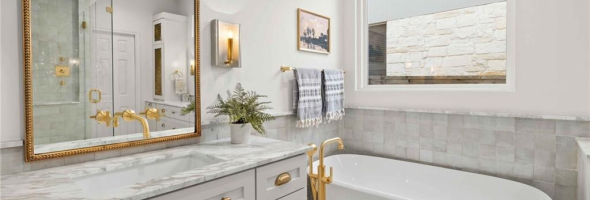
If you’re considering bathroom renovations or simply want to understand the differences between various bathroom fixtures, you’ll definitely see the term “bathroom fixtures” repeatedly. Simply put, these are the fixed devices in the bathroom connected to the water pipes and actually responsible for “water flow and drainage,” such as faucets, toilets, shower fixtures, sinks, bidets, and so on. The assembly and wiring of
some bathroom appliances also fall under this category. It sounds technical, but each device is directly related to the daily user experience—whether the water flow is smooth, how water-saving it is, how easy it is to clean, and even your budget can be affected by it.
I. What are Bathroom Fixtures?
In most home improvement discussions, bathroom fixtures refer to those components that connect to pipes, are relatively fixed in location, and have a specific function. Wherever you see water flowing, you’ll almost always find fixtures.
Some people confuse fixtures with decorative parts when decorating for the first time. For example, a towel bar is not actually a fixture; it is just hardware. Fixtures are by default “water-containing”.
In bathroom design, choosing the right fixtures can significantly improve the user experience, while choosing the wrong ones can lead to long-term “minor problems”—such as excessive water flow in the toilet, difficulty in adjusting the temperature of the faucet, and insufficient water pressure in the shower head.
II. Main Types of Bathroom Fixtures
Let’s break it down into the most common categories.
1. Faucets
Faucets may look similar at first glance, but their installation methods differ greatly, for example:
Single-hole : Combining hot and cold water in a single handle, taking a clean and efficient approach.
Center-set three holes : The three holes are arranged in a central arrangement, suitable for traditional styles.
Widespread split design : hot and cold water are independent on both sides, the design is more “ceremonial” and looks more high-end.
A little tip:
Many designers emphasize not to mix and match metallic finishes haphazardly . For example, brass + matte black is fine, but Chrome + gold can be really overwhelming. Someone on Reddit even said, “Choose at most two metals, otherwise your bathroom will look like a flea market meeting.”
Recommended design (maintains the style but with a slightly more everyday touch).
Luxier single-hole faucet : suitable for those who prefer clean lines.
Delta Trinsic : Durable and stylish; the drainage accessories are also convenient.
Moen Adler (Dual Handle) : A traditionalist option.
Signature Hardware Vassor Split Design : Strong Visual Presence.
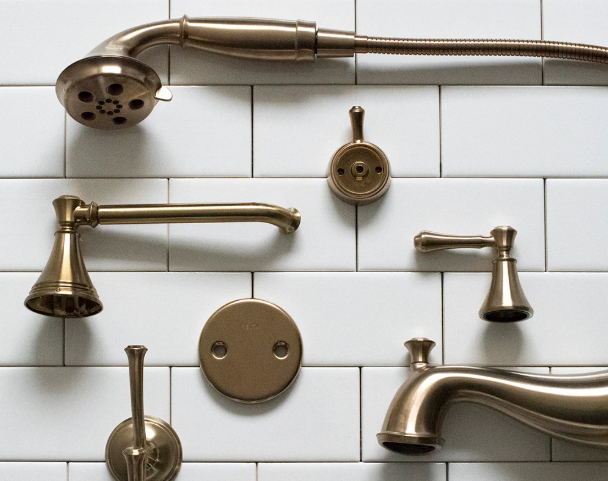
2. Shower & Tub Fixtures
Shower systems can be complex or simple, depending on your needs.
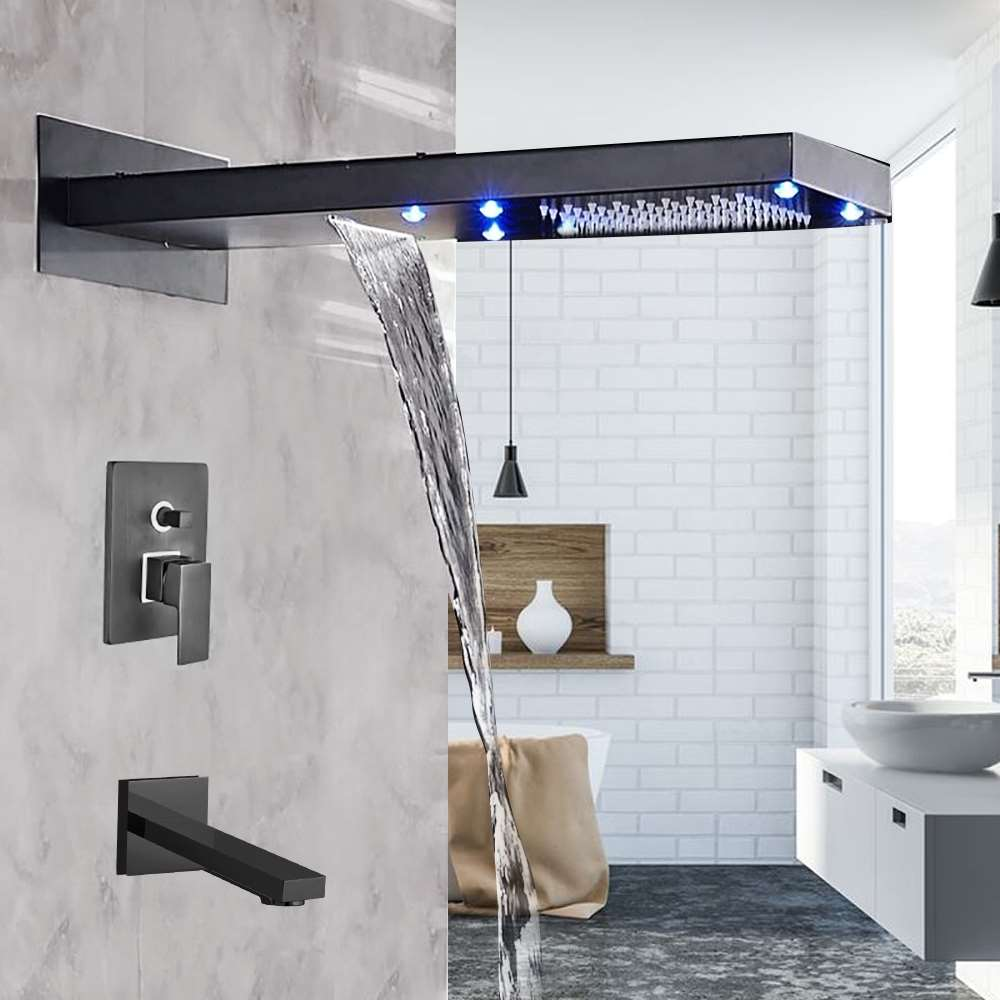
Common types include:
Wall-mounted
Rain shower
Handheld nozzle
Multi-nozzle combination (body sprayers)
Several points to consider when making a choice:
Do you want a single handle for mixing water, or multiple knobs to control different water flow patterns?
In daily life, do you use the shower or the bathtub more often?
Is a thermostatic mixing valve needed to prevent the water temperature from fluctuating?
If your home’s water pressure isn’t strong, don’t buy a large rain shower right away, as it might “shower you like a drizzle.”
3. Toilets
Toilets may look similar, but the amount of water they flush can vary greatly.
Low-flow toilets are now the mainstream choice for water conservation , especially models with WaterSense certification, which use only 1.28 gpf per flush , saving a lot of water compared to older toilets.
When choosing a toilet, in addition to looking at its appearance, I suggest you also consider:
Flushing method (direct flush, siphon)
Is it easy to clean (glazed surface, stain resistant)?
noise
4. Washbasins/Bathroom Sinks
The washbasin is more of a collaborative element with faucets.
Countertop basins look high-end, but they are prone to water stains.
Undermount sinks are easy to clean, but require a high level of skill to install.
Pay attention to the distance from the edge of the basin to the wall, and make sure the faucet can reach the center, otherwise water may splash.
If you are looking to save water, you can check the flow rate (gpm) of your faucet.
5. Bidet (sitz bath)
Bidet is divided into two categories:
Freestanding : A single basin, which looks more like a “European hotel” style.
Spray gun/nozzle type : installed on the side of the toilet, it is becoming increasingly popular in American homes.
If you’re unsure whether you’ll be able to use it, you can start with a nozzle-type bidet seat, which is inexpensive and easy to install.
III. Water Efficiency and Water Conservation Standards
When renovating a bathroom, water-saving fixtures are the most easily overlooked but most cost-effective part.
Common EPA WaterSense standards:
Faucet: ≤1.5 gpm
Shower head: ≤2.0 gpm
Toilet: ≤1.28 gpf
These numbers may seem abstract, but you can clearly see the changes in your water bill over a year.
IV. Bathroom Style and Aesthetic Suggestions
Here’s a little bit of subjective experience to add:
Mixing metals indiscriminately is not recommended . Chrome + black is okay; Gold + Nickel is likely a disaster.
The safest combination: the same main metal + a secondary metal of the same color family (e.g., matte black + brushed gold).
First decide on the faucet, then decide on the colors of the other hardware. It’s the visual focal point.
If you’re unsure what style you like, take a stroll through the plumbing showroom and try out the faucets; you’ll instantly find your direction.
V. Installation and Maintenance (Don’t overlook this)
Bathroom fixture installation is much more complicated than it looks:
The hot and cold water pipes must be aligned, otherwise the sink and faucet cannot be installed.
The depth of the shower mixing valve must be precise, otherwise the panel will not be able to be installed or will protrude.
If your home has low water pressure, don’t buy a high-end multi-head system, as it may not provide the water flow you expect.
For cleaning, soaking the showerhead and faucet in white vinegar usually removes limescale.
VI. Common Mistakes (Pitfalls Many People Have Fallen For)
Ignoring water-saving performance
results in long-term water costs that cannot be ignored.
A haphazard mix of metals and mismatched
hardware colors instantly cheapens the bathroom.
The dimensions weren’t measured correctly,
the washbasin was too big, the faucet was too high, there wasn’t enough space to flush… Every year, many people have to redo their work because of this.
fixtures
, things like mixing valves are best left to professionals.
VII. Summary: Plan first, then buy
Define style + budget + water pressure
WaterSense / Water-Saving Models are preferred.
The hardware should be harmonious, prioritizing durability over flashy designs.
For critical projects, please have them installed by professionals.
Regular cleaning and maintenance
A well-designed bathroom with the right fixtures will make your days easier—after all, we use it every day.