
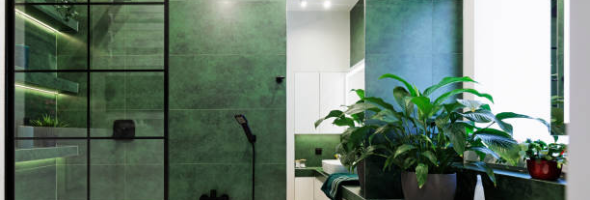
Amidst the fast-paced urban life, more and more people are seeking a natural and tranquil lifestyle. Home is no longer just a place to live, but a space for relaxation and healing. And within this, the bathroom—a corner we interact with daily—is quietly becoming a source of inspiration for a “second garden.”
Modern bathroom design is shifting from functionality to emotional and sensory expression. Designers are no longer content with cold tiles and metal lines, but are experimenting with incorporating the natural elements of greenery, the sounds of water, and light and shadow into limited spaces. More and more designers are drawing on the ” horticultural space planning concept ,” transforming the bathroom from a mere functional area into a private green garden—a healing place where the body and mind can truly relax.
Natural elements into the bathroom: trends and significance
The term “biophilic design” may sound academic, but its core is simple: it brings people back to nature.
In the bathroom, this means more than just placing a few pots of green plants; it focuses on the overall atmosphere of the space—incorporating water, light, air, and plants into the design.
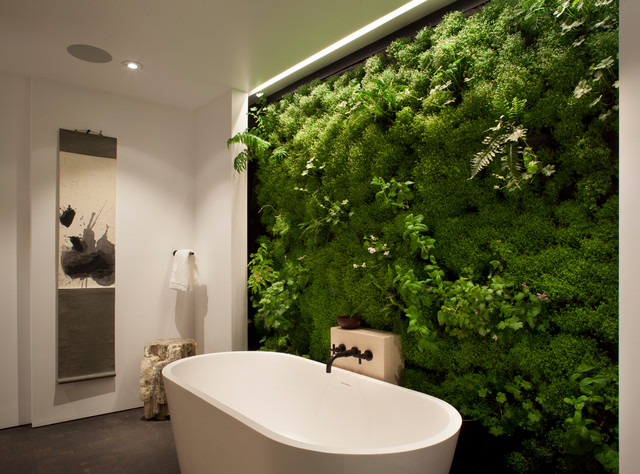
For example, you can create a “green wall” on the side of the bathtub, or lay pebbles and wooden boards on the ground to make the soles of your feet feel in harmony with nature. Even using a glass wall to introduce the view of the outdoor garden can give people the illusion of “bathing in the forest.”
This blurring of the boundaries between indoors and outdoors can greatly enhance relaxation and well-being, making bathing more than just a cleansing activity, but more like a gentle natural healing experience.
Why is the “bathing experience in greenery” becoming increasingly popular?
The fast pace of modern life is rife with anxiety, stress, and information bombardment. People need a space to temporarily disconnect. The bathroom fulfills this need, and when combined with plants, the sound of water, and soft light, it becomes a natural sanctuary.
Scientific research also confirms this trend.
For example, a study supported by Harvard University found that after introducing greenery and natural forms into a simulated space, participants’ galvanic skin response (SCL) decreased faster and their anxiety scores were lower.
These findings provide a solid scientific basis for introducing “garden thinking” into the bathroom.
Plants and water features: the key combination to create a “bathroom garden”
Plant Selection and Layout Tips
Bathrooms have high humidity and moderate temperatures, but often limited light, so choosing the right plants is crucial.
Here are some classic recommendations:
Golden Pothos (Pothos radiata) : Virtually the “king of bathroom plants,” it purifies the air and regulates humidity. Note that its sap is slightly toxic, so wash your hands when caring for it.
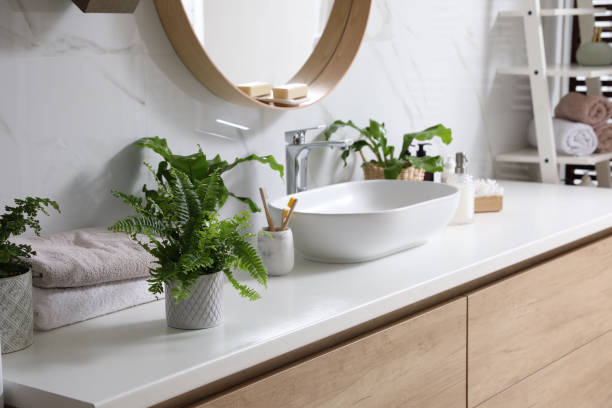
Ferns (such as bird’s nest fern and staghorn fern) : They like humid, semi-shady environments and are very suitable for hanging next to mirrors or in corners.
Ivy : It is shade-tolerant and can absorb some air pollutants.
Layout tips:
Vertical green walls : Not enough floor space? Then add a wall. A vertical garden can instantly transform a space.
Point distribution : Place a few small green plants on the sink, windowsill or next to the bathtub, which looks natural and light.
Hanging arrangement : Plants in hanging pots can create three-dimensional layers, but pay attention to the safe height and don’t let them “attack your head” while you are taking a bath.
Waterscape Design: Flowing Tranquility
Water is the soul of the bathroom. Make it “come alive” and the space will have a sense of life.
Small water features : This could be a small water bowl filled with pebbles or a water curtain wall with a trickle. The gentle sound of water can mask the noise of the city and bring peace to the space.
Combination of natural materials : wooden countertops, stone washbasins, pebble floors. These elements combined with water features are visually more natural and relaxing.
Symbiosis of plants and water : Planting some water-loving plants next to a small water feature, such as spider plants, monstera or ferns, can form a miniature ecosystem – this is a true “bathroom garden”.
Light and air: the “breathing” design of bathroom space
A natural balance of light and ventilation
If plants are the soul of a bathroom garden, then light is its breath.
in
, the clearer your space will appear. Use frosted glass windows or skylights to bring in light, or adjust the brightness with translucent curtains. Also, don’t neglect ventilation. High humidity can easily breed mold, and a good ventilation system keeps both plants and people healthy.
Studies have shown that the combination of “light + air + plants” in biophilic design can effectively reduce the body’s cortisol (stress hormone) level and make people more relaxed.
Scent and touch: invisible natural experience
In addition to vision, smell and touch can also enhance the sense of nature.
For example:
Aromatic plants : lavender, eucalyptus, and mint can all bring a sense of relaxation.
Natural materials : stone washbasins, bamboo storage, linen towels, rattan baskets… these elements make the space gentler and more humane.
From inspiration to implementation: creating your own bathroom oasis
Gardening thinking about spatial layout
Gardening design emphasizes layers and movement lines, and this concept can be fully applied to the bathroom:
Place green plants, water features, and lights at the focal point of vision , such as behind the bathtub or next to the mirror.
Keep visual space blank and don’t let the space be “flooded” by plants.
between functionality and aesthetics – making washing, bathing and storage smooth without losing the green touch.
Practical tips and safety rules
Design tips:
Clever use of colors: Green is the most soothing main color, while pink, navy blue, and lemon yellow can be used as mood embellishments.
Light and shadow layers: Use local lighting or reflectors to create the visual effect of “morning light shining on the forest”.
Furniture made of natural materials: Choose rattan, bamboo or wooden furniture to make the space warmer.
Safety Tips:
Avoid placing plants at entrances or movement routes.
Ensure a safe height when hanging plants.
Households with children or pets should avoid poisonous or thorny plants.
It is best to use tap water or rainwater that has been left standing for a day for watering to reduce the damage of chlorine to the plants.
Frequently Asked Questions
Q1: Can I still grow plants if the light is too low?
Yes. Choose shade-loving plants like golden pothos or ferns, and move them into the sun every few weeks to recharge.
Q2: How to prevent mosquitoes?
Use mosquito repellent plants such as lavender and rosemary, keep the room dry, and clean up stagnant water regularly.
Q3: How can I create a garden in a small bathroom?
Focus on utilizing vertical space and mirror reflections , and choose climbing plants to create a sense of extension.
Q4: Is maintenance difficult?
Actually, not really. Once you’ve chosen the right plant, daily care is very easy. Just wipe and trim the leaves occasionally.
Conclusion: The greenness of life is hidden in a corner of the bathroom
Transforming the bathroom into a “second garden” is more than just a spatial transformation; it’s a lifestyle attitude.
It reminds us that nature isn’t just out there; it can be rediscovered in our daily routines of washing, bathing, and breathing.
Starting with a golden pothos and a soft light, you can slowly build your own “green sanctuary.”
Here, you can calm your mind, listen to the sound of water, smell the fragrance of flowers, and let the fatigue of daily life be washed away bit by bit.